Thursday, May 22, 2014

As a Social Worker...


Edited by Angela Gentile, MSW RSW. Please share freely.

Wednesday, March 12, 2014

That One Client


I came across a quote on Facebook, and it said, "Every Nurse has that one patient that they'll remember forever." It also had a "red cross symbol" on it.  It immediately made me think about my career as a social worker, and the fact that there is also that one client that I will remember forever.

I don't think I'll ever forget a certain young male. He was in his early 20's. It was a very complex case, and this young man had a terminal illness. I learned a lot about hope, culture, Multiple Sclerosis, family dynamics, stigma, shame, the health care system, financial stressors, the social system, allied health care professionals, death, and so much more.

It made me think about changing that quote about nurses, so I made my own quote: "Every Social Worker has that one client that will be remembered forever." I am also wondering if this is true for every helping professional? I believe it is an honour to be part of people's lives in their times of need, and we learn so much about ourselves and others. Some of those people and families will never be forgotten.

Warm regards,

Angela G. Gentile, MSW RSW
Specialist in Aging
www.AngelaGGentile.com

Tuesday, March 4, 2014

35 Techniques Every Counselor Should Know (Book)


Book Review:  35 Techniques Every Counselor Should Know, by Bradley T. Erford, Susan H. Eaves, Emily M. Bryant and Katherine A. Young (2010)

Here's a great book full of counseling techniques.  A brief origin of the technique is described, "how to implement" and an example is provided for each one.  Each chapter ends with a "usefulness and evaluation" of the technique.

Techniques based upon brief counselling approaches:

1.  Scaling
2.  Exceptions
3.  Problem-Free Talk
4.  Miracle Question
5.  Flagging the Minefield

Techniques based upon Adlerian or psychodynamic approaches:

6.  I-Messages
7.  Acting As If
8.  Spitting in the Soup
9.  The Mutual Storytelling
10. Paradoxical Intention

Techniques based upon Gestalt principles:

11. Empty Chair
12. Body Movement and Exaggeration
13. Role Reversal

Techniques based upon social learning:

14. Modeling
15. Behavioral Rehearsal
16. Role Play

Techniques based upon cognitive approaches:

17. Self-Talk
18. Visual/Guided Imagery
19. Reframing
20. Thought Stopping
21. Cognitive Restructuring

Techniques based upon behavioral approaches using positive reinforcement:

22. Premack Principle
23. Behavior Chart
24. Token Economy
25. Behavioral Contract

Techniques based upon behavioral approaches using punishment:

26. Extinction
27. Time Out
28. Response Cost
29. Overcorrection

Techniques based upon cognitive-behavioral approaches:

30. Rational-Emotive Behavior Therapy (REBT)
31. Bibliotherapy
32. Deep Breathing
33. Progressive Muscle Relaxation Training (PMRT)
34. Systematic Desensitization
35. Stress Innoculation Training

I don't see mindfulness here, or Dialectical Behavior Therapy.

Great resource for counselors.

- Angela G. Gentile, MSW RSW
Specialist in Aging
www.AngelaGGentile.com


Wednesday, June 12, 2013

Professional Development for the Professional


I have come across a few companies that provide professional development in the field of health and mental health.  I will add to this list as I find new resources.  If you have any others to add, please let me know.

(These are Canadian resources).

Achieve Training Centre - Promoting Leadership and Organizational Performance

HQS Professional Development - Committed to organizing quality conferences and contributing to the professional development of health care providers in our community

Jack Hirose and Associates - Mental Health and Educational Seminars


-- Angela G. Gentile

Sunday, March 17, 2013

A Prayer for Social Workers


Bless them in the work they do for our patients, residents and clients across the system. They are advocates for those we serve and their families with the staff and physicians. 

Social Workers lend themselves to listening not only with their ears but with their hearts to determine the myriad of needs to be filled. They are educators and provide direction to those in need as our residents, clients, patients and families attempt to maneuver through the complexities of health care.

As an integral part of the team they provide the bridge to outside resources and services so that those we serve may benefit from uninterrupted care and are enabled to continue their healing.

We ask You to protect each of them to provide them with sufficient grace to be your hands and feet as they care for our mothers and their children, the elderly, the sick and dying and all Your children with special needs.


Written by the Pastoral Care staff at Holy Redeemer Hospital. 


Tuesday, March 12, 2013

Child Abuse Help Lines Around the World


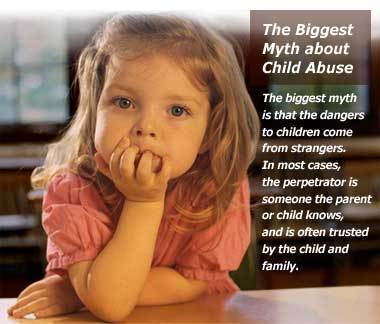
If you ever suspect a child is being abused (includes physical and sexual abuse, and neglect), here are some phone numbers and websites to refer to.  Many of them also have online chats and email services.  Here is a list of child abuse help lines and hotlines from around the world.

Canada: 

Kids Help Phone 1-800-668-6868


We're Canada's only toll-free, 24-hour, bilingual (English and French) and anonymous phone counseling, web counseling and referral service for children and youth. Every day, professional counsellors provide support to young people across the country. The service is completely anonymous and confidential - we don't trace calls, we don't have call display. You don't even have to tell us your name if you don't want to.

UK: 

Childline  0800 1111


Online chats also available.


USA, Territories and Canada: 

Childhelp National Child Abuse Hotline 1-800-422-4453


The Childhelp National Child Abuse Hotline 1-800-4-A-CHILD (1-800-422-4453) is dedicated to the prevention of child abuse. Serving the United States, its territories, and Canada, the Hotline is staffed 24 hours a day, 7 days a week with professional crisis counselors who, through interpreters, can provide assistance in 170 languages. The Hotline offers crisis intervention, information, literature, and referrals to thousands of emergency, social service, and support resources. All calls are anonymous and confidential.

World Child Abuse Hotlines:

- Angela G. Gentile, MSW RSW
Specialist in Aging


Saturday, February 16, 2013

Emotional Control


It's very possible that you can relate to the statement, "I lost it", or you know someone who lost control of their emotions. It can seem frightening and overwhelming for the person who has lost control as well as for the other person who is witnessing this even.  Why does it happen?  Well, it could due to a variety of reasons.  Here's some information that may give you some insight into what may be going on and what you can do about it.  Please feel free to add your comments.


Information on Emotional Control

The person has to be able to identify what the emotions are.  Sad, mad, frustrated, hurt, rejected, abandoned, confused, alone?  Maybe it’s a bunch of emotions, all at once.  That can be very overwhelming.

Some people are just more sensitive.  They have a gift.  These people just need to learn how to express themselves in private (or with a “safe person”), because yes, it can scare people.  In time, they will learn how to prevent these situations, or how to manage them better.

As people mature, they learn how to control their emotions.  Do a Google search on “how to stop crying” or “how to control emotions”. (example: http://www.wikihow.com/Gain-Control-of-Your-Emotions).  If they are really upset about something it is usually a sign that the situation they are in is not good for them and they should work on changing the situation.  Our outward physical expression of anguish is a physical display of our most deep-rooted emotions.  To get rid of the pain and suffering it either takes time, or a change in our circumstance.  Loss takes time to recover from.  A dysfunctional, unhealthy or toxic situation takes strength and courage to walk away from (difficult to do when you are feeling down).

Some people have trouble handling conflict.  It is harder for them to communicate their feelings and to express themselves.  Maybe they don’t have the experience or skills.  Some families/homes lack conflict (parents don’t fight in front of their kids which in my opinion is a good thing) so kids don’t actually see how to handle conflict.  This takes time and maturity to learn these skills.

Stress can put people on edge, and can affect the way we are able to control our emotions.  A build-up can end up in a catastrophic, uncontrollable, sobbing release of emotions. Look at what else is going on in the person’s life.  Is there too much stress?  Can some of that stress be alleviated somehow?

Hormones can be at the root of a catastrophic emotional reaction to a small stressor.  Like the pressure cooker that blows it’s lid.  Some birth control pills can cause a very controlled cycle of hormones, and the woman may be more susceptible to poor emotion control at certain times in the cycle.  A change in the type of pill may help.  PMS can also cause women to be more emotional and sensitive at times.

Depression or thyroid problems can also affect our ability to control our emotions.  It’s a good idea to talk to a doctor to get some blood work done, and if that all comes back normal, and the lack of emotional control continues, it may be a good idea to talk to a mental health professional.
  
Angela G. Gentile